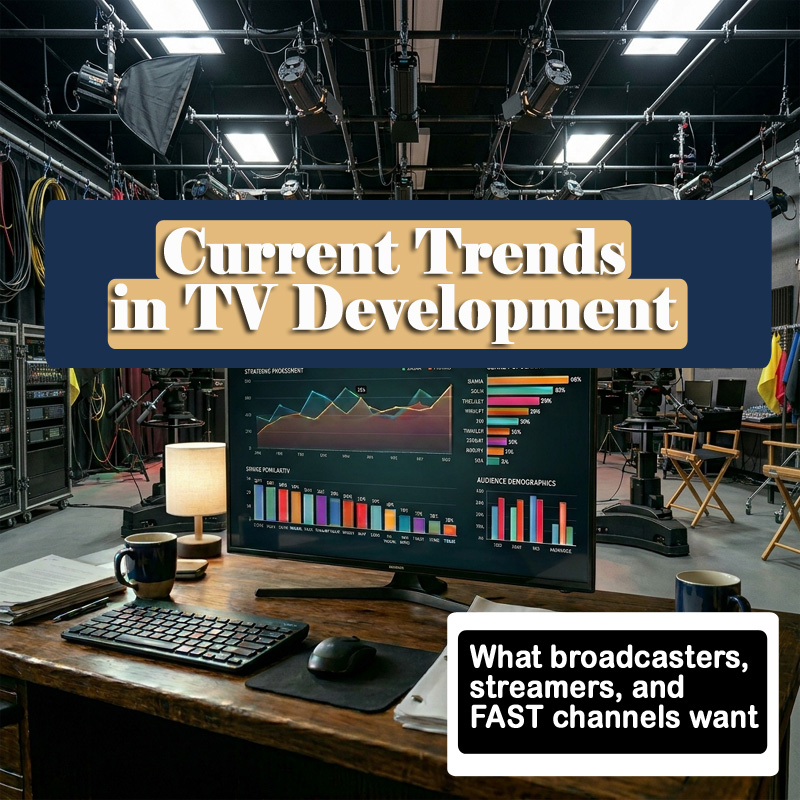
The industry’s current bottom line boils down to this: The market is rewarding clarity more than ever. Broadcast wants dependable familiarity, streamers want identity and momentum, and FAST wants repeatable audience engagement. Across all of them, the most marketable stories are the ones that feel both recognizable and fresh, with a premise that can be explained quickly and a format that promises more than one good episode.
2026 is being shaped by a simple reality: buyers want shows that are easy to understand, easy to market, and built for the way people actually watch. Across broadcast networks, streamers, and FAST channels (free ad-supported television such as PlutoTV), the strongest projects tend to combine a familiar engine with a fresh angle, while genre blending, repeatable formats, and clearer audience targets are becoming more valuable than ever.
Let’s cut to the chase and then I’ll give you the long view:
If you are thinking like a developer or writer, the key question is not just “What genre is hot?” It is “What format gives this idea the most traction?” A story may work as a network procedural, a streamer thriller, or a FAST-friendly ensemble depending on how it is framed. The same concept can be sold very differently based on the platform’s priorities.
A strong current pitch usually answers four questions fast: What is the show? Why now? Why this platform? Why will people keep watching? If those answers are clear, the genre matters less than the execution. If those answers are fuzzy, even a trendy genre can struggle.
Platform Cheat Sheet
| PLATFORM | CURRENT GENRE PREFERENCES | PREFERRED STORY SHAPES |
|---|---|---|
| Broadcast | Procedurals, family, workplace, competition, broad reality | Familiar engine with a clear weekly hook |
| Streamers | Prestige drama, genre blends, true crime, fantasy, sci-fi | High-concept, bingeable, distinctive tone |
| FAST | Library-friendly, niche genres, reality, international, repeatable formats | Channel-ready, easy-drop-in, audience-specific |
What they want…
There are a few clear story and genre trends showing up in TV development right now.
Genre shifts
Drama is still the biggest lane, but it is no longer the only center of gravity. Reporting on streaming demand shows drama’s share softening while fantasy, science fiction, and reality have gained ground, and broad “genre blend” shows are performing well too. In practice, that means buyers are still open to drama, but they increasingly want it packaged with a stronger hook: fantasy worldbuilding, crime, action, or other high-concept elements.
Hybrid storytelling
A major trend is genre fusion rather than pure category storytelling. Examples cited in the market include serialized procedurals, superhero stories that really function like crime dramas, and comedy elements folded into action, fantasy, or thriller formats. For development, that usually means projects with a recognizable engine plus a fresh tonal mix are more attractive than straightforward, generic premises.
Reality and unscripted
Reality TV is also shifting toward niche audiences and hybrid formats, especially for streamers and networks looking for loyal, definable communities. The trend is away from broad, one-size-fits-all reality and toward shows that mix documentary, competition, lifestyle, and personal-transformation storytelling. That suggests buyers want unscripted concepts that feel specific, repeatable, and easy to market.
Short-form and mobile-first
Another big development is the rise of microdramas and other vertical, mobile-first stories. Industry coverage says these short serialized formats are growing quickly and are pulling attention from major streamers, especially among younger viewers who spend a lot of time on social and mobile video. That does not replace traditional TV, but it does push studios and streamers to think about shorter episode lengths, faster hooks, and more addictive episodic structure.
What buyers seem to want
Overall, networks and streamers seem to be favoring stories that are more distinctive, more format-flexible, and easier to position around a clear audience. That includes premium genre pieces, grounded procedurals with a twist, niche reality, and projects that can live across linear, streaming, and mobile environments. The common thread is that executives want content that can cut through a crowded market and hold attention quickly.
Now let’s look into WHY this is going on…
The big creative shift
The most noticeable trend is that straight-ahead, generic series are harder to sell. Buyers are still interested in drama, comedy, and unscripted, but they want those categories to arrive with a sharper identity: a more specific world, a stronger premise, or a clearer hook. That is why hybrid storytelling is thriving, with more shows mixing crime, family drama, fantasy, satire, romance, or action in ways that feel immediate and commercially legible.
In other words, originality now has to be practical. The pitch has to tell an executive not only what the show is, but why it belongs on that platform and why viewers will keep coming back.
Broadcast networks
Broadcast remains the most conservative corner of the market. Networks still lean toward procedurals, workplace series, family dramas, and competition or reality formats because those ideas can deliver broad reach and stable weekly viewing. The best broadcast pitches usually feel familiar in structure but fresh in setting, character dynamic, or premise.
That means a network-friendly show generally needs to be easy to explain in one sentence. A strong episode engine matters as much as the concept itself, because broadcast buyers are looking for repeatable viewing and low-friction storytelling.
Streamers
Streamers are still a home for prestige drama, but they are also more open than broadcast to genre pieces, creator-driven projects, and high-concept storytelling. Fantasy, science fiction, true crime, thriller, and other genre-forward series continue to stand out, especially when they offer a distinct world or tonal mix.
At the same time, streamers seem increasingly interested in pace. Projects that reveal their premise quickly, move efficiently, and work well in a binge environment are more attractive than slow-burn ideas that take too long to signal what they are.
FAST channels
FAST has become a more serious part of the TV landscape, and its development logic is different from both broadcast and premium streaming. FAST channels work best when they can support repeat viewing, clear genre identity, and library-friendly programming. Reality, crime, lifestyle, anime, international series, and other niche-friendly categories are especially useful because they help define an audience quickly.
FAST also favors content that fits a channel environment. That means the show should not only be watchable on its own, but also make sense as part of a steady programming block where viewers can drop in at any point.
Reality and unscripted
Unscripted programming remains important, but broad generic reality is less compelling than it once was. Buyers are gravitating toward formats with a stronger point of view, a specific subculture, or a clear transformation engine. In practice, that means the best reality pitches feel defined, repeatable, and easy to describe.
This is one reason unscripted continues to travel well across platforms. If the format is strong enough, it can work on broadcast, streamers, and FAST with only minor changes in presentation.
What is fading
The hardest projects to sell are often the ones that feel too familiar without offering a strong twist. A generic workplace drama, a standard mystery, or a comedy without a clear tone can disappear quickly in a crowded market. Buyers are not necessarily looking for bigger ideas; they are looking for clearer ones.
The market is rewarding distinction, but not randomness. A project can be unusual and still need to feel grounded enough that an executive can place it on the right platform immediately.
How to pitch now
The most effective current pitch shape is “recognizable engine, fresh angle.” For broadcast, that might mean a procedural or family format with a new setting. For streamers, it might mean a genre blend with a sharp hook. For FAST, it might mean a channel-ready concept that supports repeat viewing and niche audience loyalty.
If you are writing for today’s market, the key questions are simple: What is the show? Why now? Why this platform? Why will people keep watching? If those answers are strong, the project has a much better chance of standing out.
For further information, read through:
The bottom line is that TV development is moving toward clarity, specificity, and repeatable value. Broadcast wants dependable familiarity, streamers want identity and momentum, and FAST wants audience-defined programming that can live in a channel environment.
 Write Past the Gatekeepers
REGISTRATION NOW OPEN: Writing the Low Budget Feature Workshop
Twelve Saturdays. One feature. Learn how to write screenplays for the budgets indie producers actually fund.JAN 9 – MAR 27, 2027 12 SATURDAYS 10am, PT / 2pm, ET + 3 HOURS